Finding the best font pairings for mom blog headers can feel overwhelming when you're staring at thousands of free fonts with no clear direction. A strong header pairing sets the tone for your entire blog, communicates your personality, and keeps readers engaged from the very first scroll. The good news is you don't need a design degree or a premium budget to get it right.
What Makes a Good Font Pairing for Blog Headers?
A font pairing is simply two typefaces that work together to create visual contrast and hierarchy. For mom blog headers, this typically means combining a display or script font for the blog name with a clean sans-serif or serif font for taglines, navigation, or subtitles. The contrast between decorative and functional is what makes the pairing feel intentional rather than chaotic.
The best font pairings for mom blog headers balance personality with readability. Your blog name might be whimsical, but your category labels and menu items need to be instantly legible on every screen size. Pairing a bold, expressive header font with a neutral body font solves both problems at once.
How Do You Choose Fonts That Match Your Blog's Vibe?
Start by identifying the overall aesthetic of your blog. A lifestyle blog with soft, airy photography pairs well with elegant serifs and thin scripts. A parenting humor blog benefits from rounded, friendly sans-serifs paired with playful hand-lettered fonts. Your fonts should feel like a natural extension of your visual content, not a competing element.
Consider Your Content Niche
Mom blogs cover a wide range of topics, and your font choice should reflect that. Here are some practical directions:
- DIY and craft blogs: Try pairing a textured hand-drawn font like Amatic SC with Open Sans for a creative, approachable feel.
- Meal planning and recipe blogs: A warm serif like Playfair Display combined with Lato communicates trust and warmth.
- Fashion and beauty blogs: High-contrast pairings like Montserrat with Cormorant Garamond add sophistication without feeling cold.
- Parenting advice and personal essays: Rounded fonts like Nunito paired with Quicksand feel conversational and welcoming.
Match Your Layout and Color Palette
If your blog uses a minimal, white-space-heavy layout, a bolder script font can anchor the header without cluttering the page. For blogs with busy backgrounds or full-width imagery, a cleaner serif or sans-serif header font prevents visual overload. Always test your pairing against your actual color scheme before committing.
Where Can You Find Free Fonts That Actually Work Together?
Google Fonts is the most reliable starting point because every font is free for commercial use, optimized for web performance, and easy to embed. Other trusted sources include Font Squirrel and DaFont, though always check individual licenses before using fonts from DaFont on a monetized blog.
What Are the Most Common Mistakes?
The biggest error is choosing two fonts that are too similar. If your header and subtitle use fonts with nearly the same weight, style, and x-height, the result looks accidental rather than designed. Aim for noticeable contrast in at least one dimension: weight, style, or category.
Another frequent mistake is overusing decorative fonts. A script font looks beautiful in your blog name but becomes unreadable when applied to paragraphs, buttons, or mobile menus. Keep decorative fonts limited to the blog title and one or two accent elements.
Font size inconsistency is the third issue. Your header font should be significantly larger than supporting text. A common ratio is 2:1 or 3:1 between header and body font sizes to establish clear visual hierarchy.
Quick Fixes You Can Make Today
- Reduce your blog to two fonts maximum across all elements.
- Check your header font on a mobile screen if it's hard to read at smaller sizes, switch to a bolder weight or a simpler style.
- Use FontJoy or Fontpair to generate tested combinations based on contrast algorithms.
- Clear your browser cache after changing fonts to verify the update is live.
Your Font Pairing Checklist
Before you publish your header, run through these steps:
- ✅ Does the pairing have clear contrast between the two fonts?
- ✅ Is the decorative font limited to the blog name or primary header only?
- ✅ Are both fonts legible on mobile devices at their applied sizes?
- ✅ Do the fonts complement your blog's photography and color palette?
- ✅ Are both fonts licensed for web use on your type of site?
- ✅ Does the pairing feel consistent with the tone of your content?
The best font pairings for mom blog headers don't require expensive tools or custom typefaces. With free resources like Google Fonts and a clear understanding of contrast, hierarchy, and tone, you can create a header that feels polished and unmistakably yours.
Explore Design Free Feminine Font Pairing Guide for Lifestyle Blogs
 Free Font Pairings for Your Mom Blog Branding
 Free Font Pairing Inspiration for Mom Blog Social Media Graphics
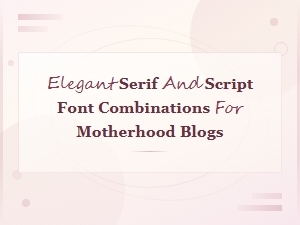 Free Elegant Serif and Script Font Pairings for Motherhood Blogs
 Best Diy Craft Fonts for Mom Bloggers to Elevate Creative Projects
 Best Handwritten Fonts for Mom Blog Craft Projects You Will Love